
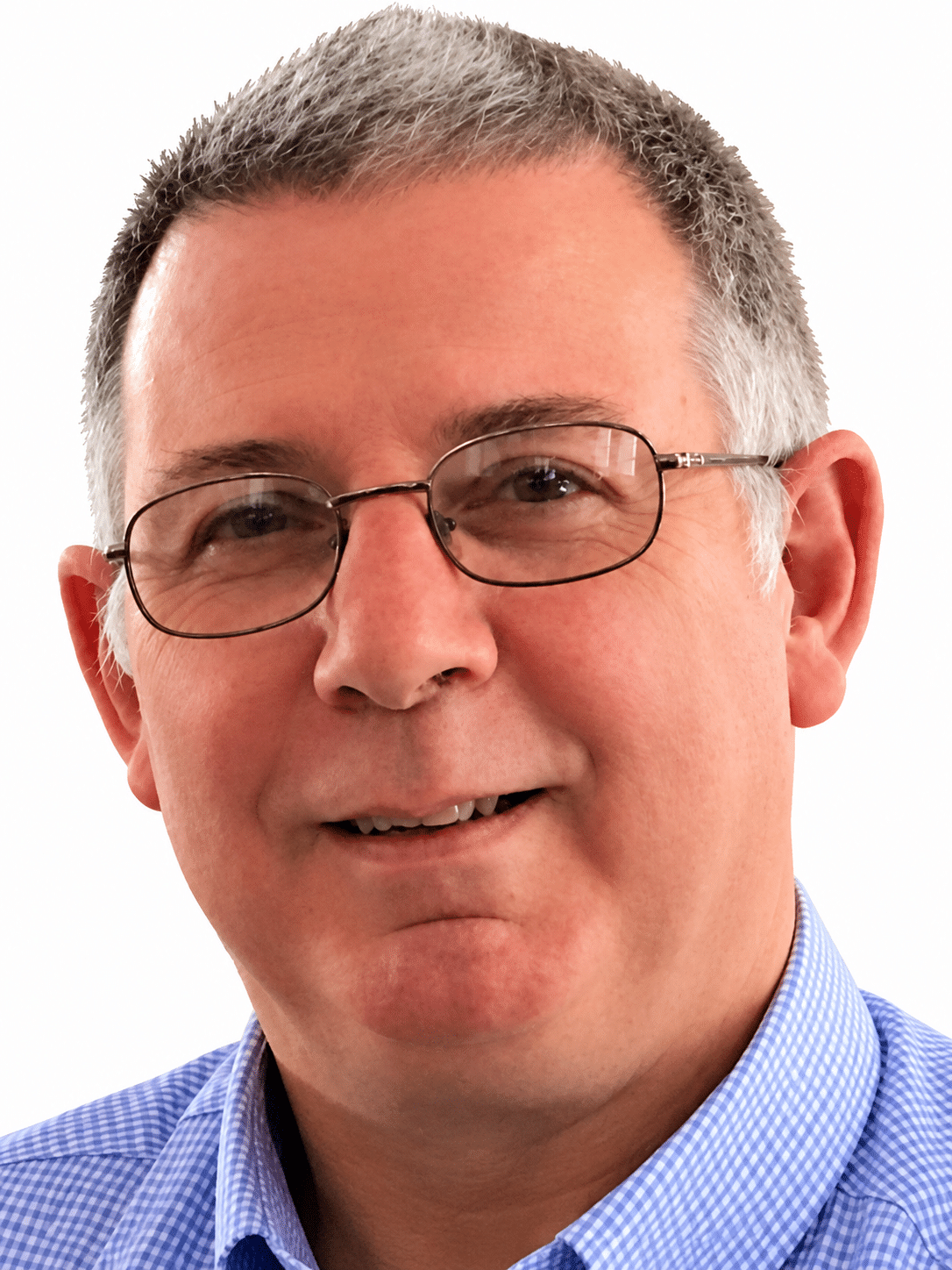
Forty-five years at the sharp end
P.J. Carroll has been dealing with emergencies since 1978. Not talking about them — dealing with them.
He is the Managing Director of Universal First Aid Services, a PHECC Approved Training Institution and Irish Heart Foundation training site founded in 2023. If you trained with P.J. over the years and wondered where he is now, you’ll find him at UFAS.
Where he learned it
P.J. began his career in the Irish Defence Forces, serving from 1978 to 1990 with the 2nd Field Artillery Regiment, 2nd Field Supply and Transport, and the 56th Infantry Battalion with UNIFIL in Lebanon. He also served as an ambulance driver at St Bricin’s Military Hospital in Dublin.
From there he moved to Waverley Ambulance Service as a driver and attendant, and was promoted to training officer and supervisor in 1993 — the point at which teaching became the work rather than a sideline.
Alongside that he qualified as an Emergency Medical Technician, and trained in basic trauma life support, automated external defibrillation, advanced airway management and intravenous fluid administration, working part-time as an assistant instructor while he did it.
He went out on his own in 1997, trading as First Medic First Aid Services, and spent the following decades delivering first aid and safety training — including fourteen years with Safety Ireland First Response, from 2009 to 2023.
In 2023, with a team of seasoned professionals, he founded UFAS.
Qualifications
- Emergency Medical Technician
- Pre-Hospital Emergency Care Council (PHECC) First Aid Response Instructor
- PHECC Cardiac First Response Community Instructor
- Irish Heart Foundation Basic Life Support Instructor
- Mental Health First Aid Instructor
- Manual Handling and Patient Moving Instructor
- Fire Warden Instructor
- FETAC Level 6
- National University of Ireland Certificate in Adult Education
- Stop the Bleed Instructor
What he is trying to build
P.J.’s thinking starts from a fact he has watched play out for four decades: when someone’s heart stops, the ambulance is not the first responder. The person standing beside them is.
Everything follows from that. If survival is decided in the first few minutes, then the people who matter most are not paramedics — they are the colleague at the next desk, the coach on the sideline, the neighbour across the road. Getting those people trained, and getting defibrillators to where those people actually are, is the work.
It is why he drove UFAS to become approved to deliver Cardiac First Response (CFR-A) training, and why he went further and secured approval for CFR-A instructor training and recertification. Training responders saves lives one room at a time. Training instructors multiplies it.
Standards, not slogans
Under P.J.’s direction, UFAS became a PHECC Approved Training Institution, and at the end of 2025 it passed its first PHECC audit with flying colours.
He is straightforward about why that matters. A first-aid certificate is only worth what the training behind it is worth. An audit is an impartial outsider checking the reality rather than the brochure — and if you are asking people to trust you with something they may one day use on a stranger, you should welcome the inspection.
For P.J., recognised training comes with standards — and those standards have to be maintained.
He gives the credit away
A small thing, but a telling one. When UFAS won its CFR-A approval, P.J.’s public response was to thank the crew who got it over the line. When it passed the PHECC audit, he thanked everyone who had helped the organisation achieve it.
He talks about his team more readily than he talks about himself. It tells you something about the organisation he is building — and what it is like to be taught by it.
The emergencies that leave no mark
P.J. is a qualified Mental Health First Aid Instructor, and he is willing to say out loud what much of the safety world still steps around: some of the hardest emergencies leave no mark at all.
His position on it is unfussy. You do not need the right words, and you do not need to fix anything. Ask someone how they are really doing, and listen to the answer. Starting the conversation might be all it takes. It is always good to talk.
For a man whose trade is emergencies, treating mental health as part of the job rather than a separate topic is not a marketing angle. It is consistency.
Giving something back
UFAS ran a fundraising appeal for the Irish Heart Foundation with a life-saving Automated External Defibrillator (AED) as the prize — supporting a charity working on heart disease and stroke, and putting a defibrillator into a community, in the same stroke.
P.J. is a familiar face at the events where this work gets done, including the national Cardiac First Response conference, where the trainers, responder groups and volunteers building Ireland’s community response network get into a room together.
What people say
“Our instructor P.J. Carroll was a first class gent and true professional. Myself and my team were delighted with the skills training and course interaction. We look forward to further advanced training seminars in the future.”
Stephen, following a Cardiac First Response course
Talk to P.J. and the team
If you want to talk about training for your organisation, or about getting a defibrillator where it needs to be, we would be glad to hear from you.
Call us on 01 699 1126 or email info@ufas.ie.